The journey begins at the Seafolk base in Portorosa: after completing check-in, the technical briefing, and gathering the latest tips from our team, the bow points straight toward Vulcano.
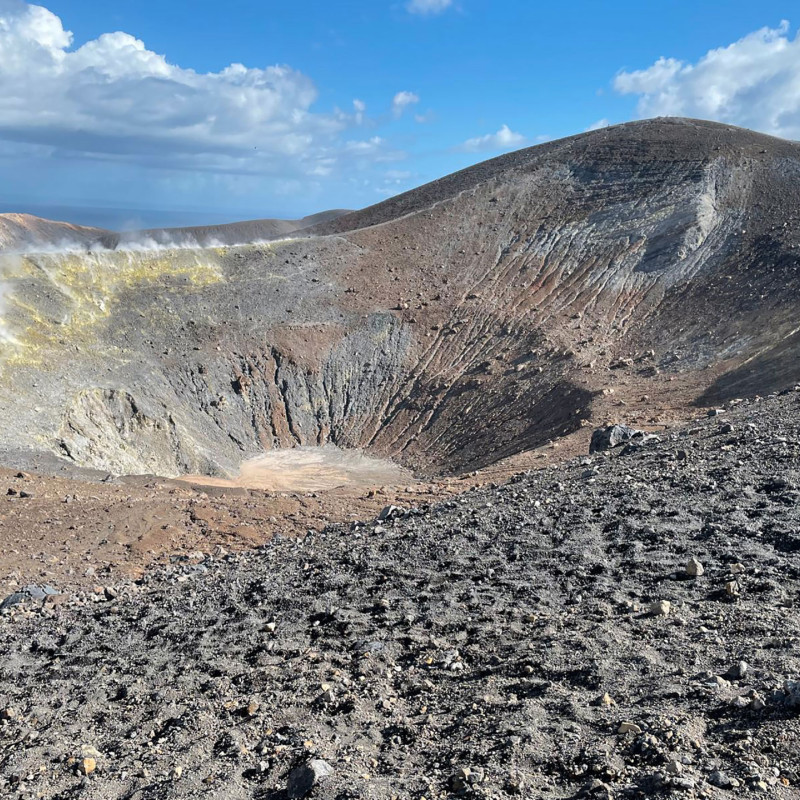
The island welcomes you with its wild, sulfurous charm. If you love trekking, a one-hour hike up the trail leads to the 400-meter summit of the Fossa Crater: the view of the archipelago from up here will leave you breathless. For those who prefer to stay at sea level, the coastline hides extraordinary marine gems: Grotta del Cavallo (Horse Cave), a paradise for snorkelers, and the Piscina di Venere (Venus Pool), a natural basin of tuff and basalt with crystal-clear, shallow waters.
Mooring Tip: In the bay of Porto di Levante, you’ll find a large, well-serviced buoy field. From here, a stroll along the promenade will take you to the famous Pozza dei Fanghi (Mud Pool), perfect for a rejuvenating and therapeutic stop before choosing one of the village's many cozy restaurants.
On the second day, we set sail for Lipari, the beating heart and largest island of the archipelago. Sailing along the coast, you’ll encounter the spectacular Spiaggia Bianca (White Beach, or Papesca), where the seabed takes on blinding turquoise hues thanks to old pumice stone deposits.
Once ashore, lose yourself in the alleys of the town, dominated by the imposing fortified castle that divides Marina Corta from Marina Grande. If you love history, the Contrada Diana Archaeological Park holds thousands of years of the archipelago's secrets.
Mooring Tip: Take advantage of the boat to reach Praia di Vinci beach—an oasis of pristine peace and crystal-clear waters that is literally unreachable by land.
The navigation continues toward Salina, the "green island," famous for its Malvasia vineyards and cinematic vistas. A must-see stop is the spectacular Pollara Bay, a natural amphitheater sheer above the sea, made immortal by Massimo Troisi’s film "Il Postino" (The Postman).
The historic center of Santa Marina offers a refined and welcoming atmosphere, filled with cobbled streets, artisanal boutiques, and maritime pines.
Mooring Tip: For the night, you can comfortably moor at the Porto delle Eolie in Santa Marina, or opt for a suggestive night at anchor in front of Lingua, enjoying the gentle rock of the sea under the stars.
Panarea, the smallest of the Aeolian Islands, is a concentration of fashionable elegance and archaeological beauty. The first stop is at Cala Zimmari, a sheltered, sandy bay from which you can walk to the nearby prehistoric village of Capo Milazzese.
But the true jewel of the island is Cala Junco, a natural pool enclosed by rock formations that create shifting shades ranging from emerald green to deep blue.
Mooring Tip: Two equipped buoy fields are located right in front of the village of San Pietro. During the summer season, a highly convenient "boat-taxi" service operates through the night, perfect for heading ashore to enjoy the island's vibrant nightlife.
Welcome to the presence of "Iddu" (Him), the constantly active volcano that dominates the island of Stromboli. This colossus of lava offers one of the most incredible natural spectacles on the planet, especially after sunset, when fountains of lava stand out against the dark sky along the Sciara del Fuoco.
The more adventurous can take on a guided trek toward the summit craters to observe the explosions up close.
Mooring Tip: Stromboli requires caution. Navigation should only be planned with stable weather, as the island offers no protected bays or shallow depths for anchoring. The only safe stopping point is the buoy field or anchoring directly in front of the village, where the seabed slopes more gently.
For the final days, the route gets wilder, pointing toward the westernmost, most untouched islands. Filicudi enchants with the Grotta del Bue Marino (Sea Ox Cave), famous for the magical play of light created inside. The island is wonderful to explore on foot: don’t miss an aperitif or a fresh fish dinner at the tiny harbor of Pecorini Mare, a fishermen's village frozen in time.
Finally, there is Alicudi—a true journey back in time. Here, there are no cars or paved roads, only lava-stone stairways and donkeys, the only means for transporting goods. Cruising it by boat is the only way to truly appreciate its silent cliffs and terraces overlooking the sea.
Mooring Tip: Alicudi is highly exposed and offers very few safe berths for the night. The Seafolk experts' advice is to explore it during the day and head back to Filicudi for the night, where you will find much more sheltered moorings.
Back to blog